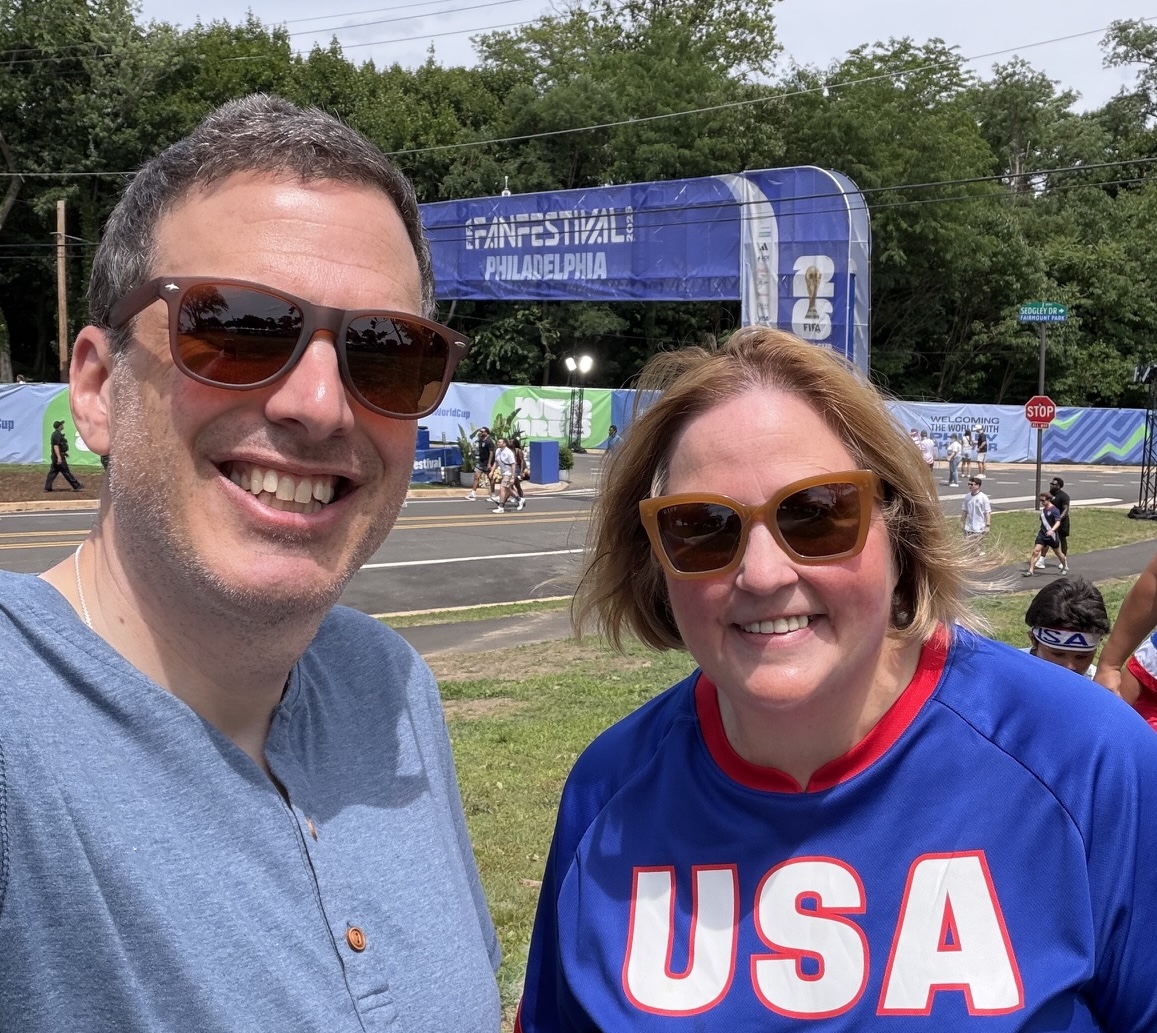

From the FIFA World Cup to the MLB All-Star Game, Philadelphia spent 2026 in the global spotlight, welcoming the world and giving millions of people a new reason to discover the city.
There are certain years when you know, even while you are living through them, that people are going to talk about them for a long time. For Philadelphia, 2026 has been one of those years.
We knew America’s 250th birthday was coming, and we knew Philadelphia would have a special place in the celebration. We also knew some very big events were headed our way. What I don’t think I fully appreciated was how all of those things would come together, or how much fun it would be to watch the rest of the world discover — and in some cases rediscover — Philadelphia.
For those of us who live in the region, Philadelphia can sometimes become the backdrop to everyday life. Independence Hall is a place we have all walked past. The Art Museum steps are something we drive by. Fairmount Park is where we walk, run, bike or go to an event. Citizens Bank Park is where we spend summer nights watching the Phillies.
This year, millions of other people were looking at those same places, often for the first time, and reminding us how remarkable they really are. That may be one of my favorite parts of Philadelphia 250.
The World Came to Philadelphia
The scale of what happened here this summer is worth stopping to appreciate. Philadelphia hosted six FIFA World Cup matches between June 14 and July 4, bringing hundreds of thousands of visitors to the region and generating an economic impact measured in the hundreds of millions of dollars. Business and government leaders from around the world also came to Pennsylvania during the tournament.
Those numbers are impressive, but the numbers aren’t really what I remember. I remember the people.
Walking through the FIFA Fan Festival at Lemon Hill, you heard different languages, saw jerseys from countries around the world and watched people experience Philadelphia together. There were families, serious soccer fans, casual fans and people who simply wanted to be part of something that doesn’t come to your hometown very often.
Lemon Hill was also a particularly interesting setting for it. Fairmount Park isn’t simply a large city park. Its history stretches back generations, with land along the Schuylkill assembled in the 19th century in part to protect the city’s water supply and eventually forming one of America’s great urban park systems. Lemon Hill, with its historic mansion and views toward the city, was an important part of the early development of the park.
I liked the contrast. Here was one of the most modern and global sporting events in the world, powered by enormous screens, international broadcasts and social media, taking place in a landscape that has been part of Philadelphia life for generations. It didn’t feel out of place. Somehow, it worked.
Watching Philadelphia Through Everyone Else’s Phone
One of the things I found most interesting during the World Cup had very little to do with what happened on the field.
Philadelphia suddenly seemed to be everywhere on social media.
People visiting for the tournament were walking around Center City with their phones out, making TikToks and YouTube videos, posting Instagram Reels and documenting their trips. They were eating cheesesteaks, going to Reading Terminal Market, riding SEPTA, visiting the Italian Market, climbing the Rocky Steps, walking around City Hall and exploring neighborhoods they probably knew very little about before they arrived.
And a lot of them seemed genuinely surprised by how much they liked Philadelphia.

I found myself watching these videos because it was interesting to see the city through someone else’s eyes. Places that are completely ordinary to us became discoveries for someone visiting from another state or another country.
That kind of attention is difficult to manufacture. Philadelphia could spend millions of dollars telling people that it is a great place to visit, but there is something much more convincing about watching someone who came here for a soccer match turn on their phone and tell thousands of followers that they had no idea Philadelphia was this beautiful, this historic or this much fun.
The World Cup gave many of these visitors a reason to come to Philadelphia. The city itself gave them plenty to talk about once they got here.
Celebrating July 4 Where It Happened
Then came July 4, and this was where Philadelphia’s role in 2026 became about much more than hosting major events.
There are Independence Day celebrations everywhere in America, but celebrating America’s 250th birthday in Philadelphia is different because so much of the history we commemorate actually happened here.
In the days leading up to July 4, members of Congress gathered inside Independence Hall to commemorate the July 2, 1776 vote for independence, returning to essentially the same room where the Second Continental Congress made that decision 250 years earlier.
That is one of those things that can be easy to overlook when you live here. Independence Hall isn’t a recreation of the place where the United States began. It is the place. Two hundred and fifty years later, American leaders were standing in the same room and reflecting on a decision made there that changed the world.
The July 4 celebration then filled the city, culminating in the concert and fireworks on the Benjamin Franklin Parkway. Philadelphia has fireworks every Independence Day, but this one obviously carried a little more meaning. It marked 250 years, in the city where the Declaration of Independence was adopted.
For all of the large events happening around Philadelphia this year, I think those moments helped keep the celebration connected to why Philadelphia was receiving so much attention in the first place.
The Liberty Medal and Pope Leo
Another moment that seemed particularly appropriate for the year was the National Constitution Center’s decision to award its 2026 Liberty Medal to Pope Leo XIV.
The Liberty Medal has been awarded since 1989 to individuals and organizations whose work reflects the principles of liberty and freedom. Over the years, recipients have included international leaders, civil rights figures, humanitarians and others whose work has advanced the ideals associated with individual liberty and democratic society. Since 2006, the National Constitution Center has administered the award here in Philadelphia.
This year’s recipient added another interesting layer to the 250th anniversary. Pope Leo XIV is the first American-born pope, and the medal recognized his commitment to religious liberty and freedom of conscience and expression. He accepted the honor from the Vatican on the eve of America’s 250th birthday.
There was a lot of symbolism packed into that moment: an American-born pope receiving an award devoted to liberty from an institution located steps from Independence Hall during the 250th anniversary of the country.
It was another reminder that Philadelphia’s historical role isn’t only about preserving what happened here in the 18th century. The city continues to provide a setting for conversations about what those ideas mean today.
And Then Philadelphia Became a Baseball Town Again
Almost as soon as the World Cup ended, Philadelphia changed jerseys.
Major League Baseball’s All-Star Week arrived, bringing another wave of visitors and events to the city. There was the All-Star Village, the Home Run Derby, the HBCU Swingman Classic, youth baseball activities and, of course, the All-Star Game at Citizens Bank Park.
I was fortunate enough to experience some of it myself.
One of my favorite moments from the All-Star Game wasn’t a home run or a great defensive play. It happened during “America the Beautiful.”
Children rode bicycles onto the field in a scene inspired by The Sandlot, joining the All-Stars on the diamond as Ray Charles’ version of the song played and fireworks filled the sky. It was an obvious reference to a movie that, for a generation of baseball fans, captured what it felt like to be a kid who loved baseball.
What made the moment even better was watching the players interact with the kids. One showed a child how he grips a baseball. Players looked through baseball cards with them. Bryce Harper talked with a young fan, while Brandon Marsh recorded a message for one child’s grandmother.
For a few minutes, the production surrounding an All-Star Game faded into the background and baseball became something very simple again. It was about being a kid, getting on your bike, playing with your friends and falling in love with the game.
In a summer filled with huge crowds and enormous events, I thought it was a surprisingly personal moment. It also felt appropriate for Philadelphia, a city where sports are rarely just entertainment and where generations of families build memories around them.
Philadelphia 250 Extends Into Bucks County
One of the things I have appreciated about the 250th anniversary is that the celebration hasn’t stopped at the Philadelphia city line.
Here in Bucks County, we have our own extraordinary connection to the founding of the country. Washington Crossing is part of the American story, as are Pennsbury Manor and communities throughout the county whose histories reach back to the colonial and Revolutionary periods.
Bucks County’s America 250 activities have created another opportunity to explore that history through community events, educational programs and historical experiences highlighting Revolutionary War history, the Lenape people, abolitionism and other parts of the county’s story.
The July 4 celebration at Washington Crossing Historic Park was perhaps the most obvious example, with living historians, a military encampment, traditional crafts, readings of the Declaration of Independence, music and fireworks over the Delaware River.
I think there is something special about being able to move between Philadelphia and Bucks County and experience so much of the nation’s founding landscape within a relatively short distance. We don’t need to create a connection to 1776 for the anniversary. The connection has always been here. The 250th has simply given us a reason to look at it again.
Seeing Philadelphia a Little Differently
I’ve spent much of 2026 watching Philadelphia through two different sets of eyes.
One is familiar. It’s the Philadelphia I know: the sports teams, the neighborhoods, the food, the history, the people and, yes, all of the imperfections that come with living here and loving this city.
The other is the Philadelphia I have watched visitors discover.
I think that has been refreshing.
The international soccer fans dancing at Lemon Hill weren’t thinking about whether Philadelphia gets enough national respect. The visitors making TikToks from Reading Terminal Market weren’t debating the city’s image. Baseball fans walking around town during All-Star Week weren’t analyzing Philadelphia’s tourism strategy.
They were just enjoying Philadelphia.
And I think there is something valuable in that for those of us who live here. Sometimes it takes seeing a familiar place through someone else’s camera to notice it again ourselves.
Philadelphia has received an extraordinary amount of attention in 2026, and I think the city and region have made the most of it. The major events were successful and the crowds were enormous, but the larger story, at least for me, has been watching people experience the city between the events. They walked our streets, ate in our restaurants, explored our history, spent time in our parks and neighborhoods and then shared those experiences with people around the world.
The World Cup matches are over. The temporary setup at Lemon Hill is gone. All-Star Week has moved on, and the 250th birthday fireworks are now another Philadelphia memory.
But the attention they brought to Philadelphia doesn’t necessarily disappear with them.
There are now people around the country and around the world who know Philadelphia a little differently than they did at the beginning of the year. Some will come back. Others will tell someone else about their trip. Millions more have seen pieces of the city through the videos, photos and stories that visitors shared.
And maybe those of us who live here have been reminded of a few things, too.
For 250 years, Philadelphia has carried the unusual distinction of being a place where an idea became a country. This year, the world had plenty of reasons to come back and take another look.
I’ve enjoyed watching them discover what many of us already knew was here.
Leave a Reply